AMA Maternity Code Changes: What Is Different in 2027
The AMA's maternity code changes add 12 codes, revise 6, and delete 17. Antepartum and postpartum care move to per-encounter E/M reporting. Labor management becomes a daily code, split into straightforward and complex levels. Delivery codes are streamlined and reported independently of labor management. Our white paper on the 2027 maternity coding changes works through what each of these means for payment policy, documentation, and adjudication.
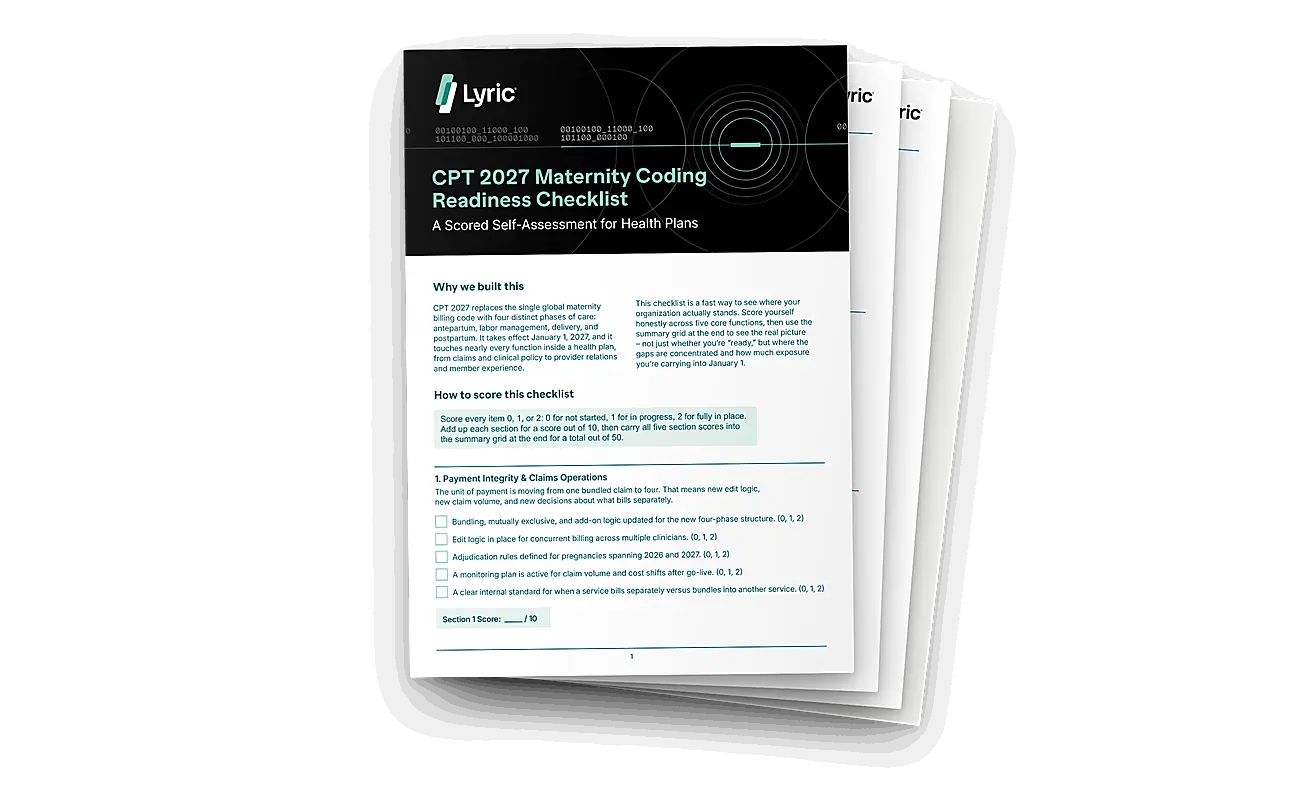
What the checklist covers
- Payment Integrity and Claims Operations. The unit of payment is moving from one bundled claim to four, which means new edit logic, new claim volume, and new decisions about what bills separately.
- Clinical Policy and Medical Necessity. The hardest questions here are clinical rather than financial: what counts as complex, and which pregnancies justify more intensive care.
- Provider and Network Readiness. The practices billing under the new structure have to operationalize it the same day you are adjudicating under it.
- Member and Benefit Experience. A member used to seeing one claim for their pregnancy is about to see several, and employer clients will notice the shift too.
- Data, Quality and Outcomes. More granular data is only an advantage if your team can act on it.
What your score means
- 40 to 50, on track. Focus remaining effort on your two weakest sections. You are in a position to refine, not rebuild.
- 25 to 39, partial readiness. You have a Q4 compression risk. Enough is unfinished that closing the gap before January 1 will strain more than one team at once.
- Below 25, material exposure. Multiple functions are unprepared. This is the profile most likely to see billing disputes, member confusion, and provider friction in Q1 2027.
Why score now
Pregnancies that begin prenatal care in 2026 can deliver in 2027, so cross-year adjudication rules are needed before the effective date rather than after it. With three months left, scoring surfaces which teams still have open decisions while there is time to close them.
Who should use it
Payment integrity, clinical policy, provider relations, benefit design, member experience, quality, and analytics leads. It is built to be scored as a group rather than by one person.
Where to go from here
The checklist tells you where the gaps are. The white paper covers how to close them. It works through the questions each section raises: what separates straightforward from complex labor management, how to adjudicate pregnancies that begin under one framework and conclude under another, and which stakeholder owns which piece of readiness. It closes with a five-phase roadmap running from 2026 baseline through 2027 monitoring and intervention.
Read the white paper: the full readiness roadmap for the 2027 maternity coding changes.